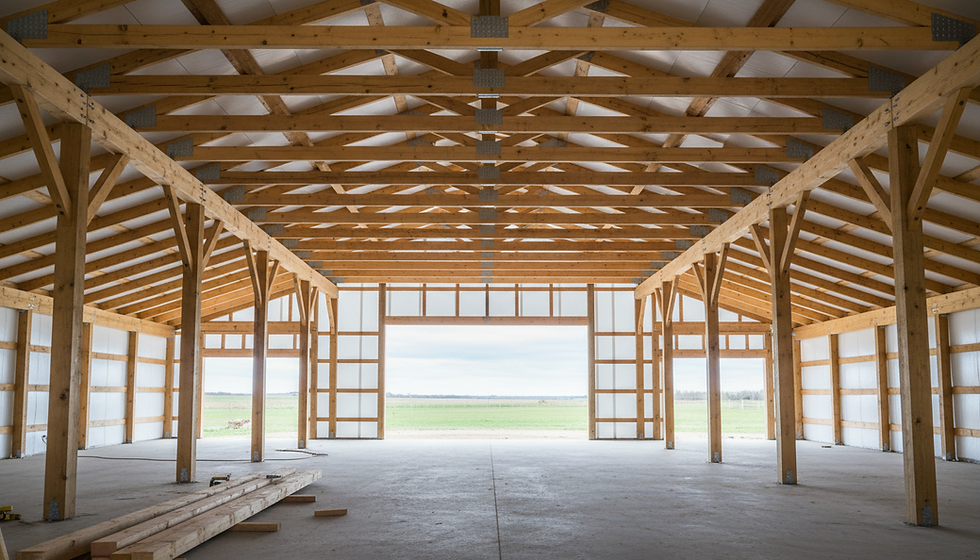
How Builders Can Streamline Truss Orders and Avoid Jobsite Delays

For a builder, a delay in the truss package is not just a scheduling inconvenience. It is a financial burden that halts multiple trades and pushes back closing dates. Navigating the complexities of roof and floor truss orders requires a proactive approach to design, engineering, and logistics.
At Superior Building Concepts, we focus on providing the technical precision and reliable timelines builders need to stay profitable. By addressing these critical areas before you order, you can ensure a seamless transition from foundations to framing.
Accelerating the Truss Design Process
Efficiency begins with the quality of information provided at the start. To provide an accurate quote and a design that integrates perfectly with your build, truss designers require a complete data set.
At minimum, your order should include:
Finalized architectural plans and framing layouts.
Specific building dimensions and roof geometry.
The intended use of the structure (Residential, Commercial, or Agricultural).
Precise location of bearing points and internal supports.
Local design criteria, including wind, snow, and seismic loads.
Providing comprehensive data early prevents the "redesign loop" that often pushes back production dates.
Managing Truss Lead Times and Production Schedules
Lead times are a variable in any construction project. They fluctuate based on design complexity and current manufacturing volume. Understanding the workflow helps you schedule trades with greater accuracy.
The typical workflow includes:
Initial design and engineering review.
Builder review and approval of truss submittals.
Precision manufacturing.
Logistics and jobsite delivery.
The most common cause of avoidable delay is a slow submittal approval process. Builders who prioritize reviewing shop drawings keep their projects moving through the production queue.
Protecting Your Project with Sealed Engineering
Sealed engineering documents are more than a permit requirement. They are a structural guarantee. Our trusses are designed using industry leading software to calculate exact loads based on local building codes.
Sealed truss drawings provide three primary benefits:
They streamline the inspection and permitting process.
They reduce structural liability for the builder.
They provide documented proof that all load assumptions meet site conditions.
Optimizing Performance with Southern Yellow Pine
The structural integrity of a truss depends on the grade of lumber used. Superior Building Concepts utilizes #1 Southern Yellow Pine for both roof and floor trusses. This species is preferred by builders for its high strength to weight ratio and predictable performance across long spans.
By using premium materials and precision cut components, we ensure that trusses arrive straight and consistent. This reduces the need for field adjustments and speeds up the framing process.
Reducing Errors with Rigorous Quality Control
A truss that does not fit on the jobsite represents a failure in the manufacturing process. To prevent this, our facility employs strict quality checks, including:
Verification of lumber grade and moisture content.
Precise plate placement and hydraulic embedment.
Dimensional verification against the approved submittals.
Pre-shipment inspections.
These steps ensure that your package arrives ready for immediate installation.
Preventing Jobsite Damage and Delivery Issues
The delivery phase is where many structural components are at risk of damage. Builders can protect their investment by preparing the site in advance.
Preparation includes:
Ensuring clear, stable access for delivery trucks.
Preparing a level, dry area for truss storage.
Planning the staging area to allow for efficient installation.
Proper handling on the jobsite preserves the structural integrity of the trusses and prevents moisture related issues before the building is dried in.
Strategies to Avoid Common Ordering Mistakes
Costly delays often stem from preventable errors during the planning phase. To maintain your schedule, avoid these common pitfalls:
Placing orders before building plans are fully finalized.
Delaying the approval of technical submittals.
Modifying structural bearing points without consulting the truss designer.
Improperly storing trusses on the ground for extended periods.
Partnering for Successful Builds
A truss supplier should function as a technical partner. At Superior Building Concepts, we help builders identify design conflicts early, provide accurate sealed documents, and deliver high quality products that meet the demands of modern construction.
Final Thoughts: Building for Profit and Performance
By understanding the technical and logistical requirements of truss ordering, builders can protect their margins and their reputations. Accurate engineering and timely communication are the foundation of a successful framing phase.